
System Overview
Airlight offers an advanced IoT-Enabled Fire Alarm System that brings remote monitoring, real-time alarm notifications and fault diagnosis to conventional fire alarm systems.
By integrating Internet of Things (IoT) technology, the system enables authorised users to access fire alarm system information through mobile phones, laptops and computers, providing greater visibility and faster communication during emergencies.
KEY FEATURES
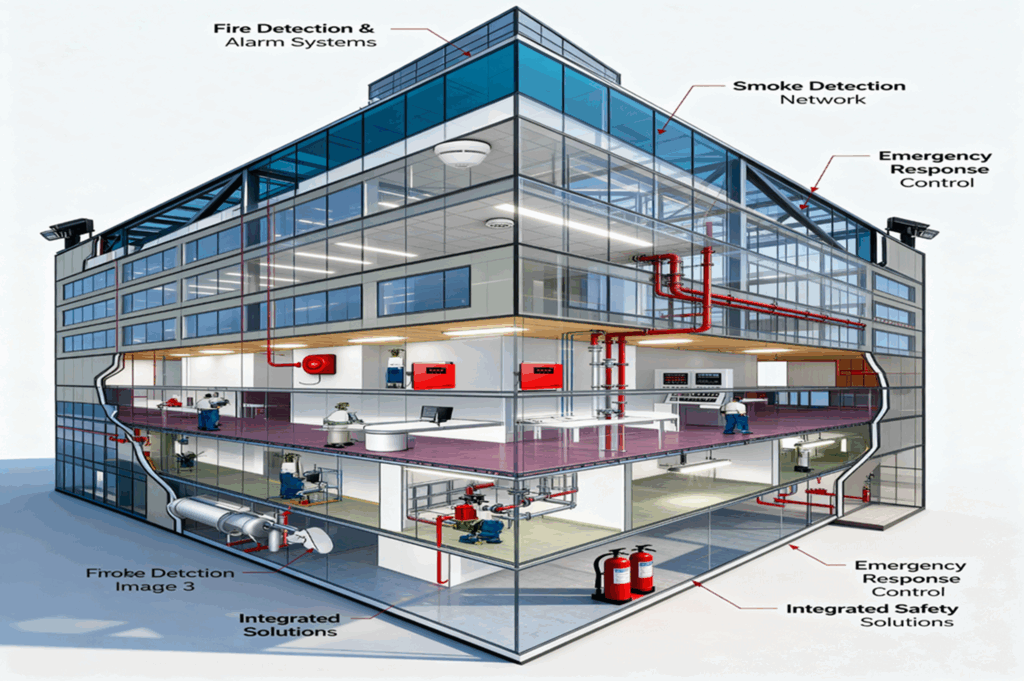
Basic Connectivity Architecture
Fire Alarm Control Panel (FACP)
↓
IoT Communication Interface / Gateway / PC
↓
Internet Router
↓
Remote Cloud Server
↓
Mobile Application / Laptop / Desktop Computer
↓
Remote Monitoring & AMC Technical Support
THE FUNDAMENTAL BENEFITS OF IOT INTEGRATION
Traditionally, fire alarm monitoring and system diagnostics are largely dependent on physical access to the Fire Command Centre (FCC).
IoT technology extends monitoring and technical support beyond the physical boundaries of the FCC, allowing authorised personnel and maintenance teams to access relevant system information remotely.
This helps improve operational visibility, response coordination and the efficiency of annual maintenance contract (AMC) services.
Understanding the Communication Process
To make a conventional fire alarm system IoT-enabled, certain additional hardware and software components are generally required.
1. FACP Communication Interface
Provides the communication link between the Fire Alarm Control Panel (FACP) and the IoT platform, enabling fire alarm events, faults and system status information to be transferred.
2. IoT Software / Communication Gateway
Collects information from the fire alarm control panel, processes the available data and transmits it to the remote monitoring platform.
3. Internet Router
Establishes internet connectivity between the local fire alarm system infrastructure and the remote server.
4. Remote Cloud Server
Receives, processes and stores the information transmitted by the fire alarm system, making it accessible to authorised users.
5. Mobile Application / Web Interface
Provides authorised users with remote access to fire alarm system information through smartphones, laptops and desktop computers.
How Does the IoT Connectivity Architecture Work?
The IoT-enabled fire alarm system follows a simple communication architecture that connects the local fire alarm control panel to a remote monitoring platform.
Smarter Fire Alarm Monitoring with Airlight
IoT integration takes conventional fire alarm systems a step further by connecting local fire safety infrastructure with remote digital monitoring.
With Airlight’s IoT-enabled fire alarm solution, building owners, facility managers and maintenance teams can benefit from improved system visibility, faster information sharing and more efficient technical support.